A tradeshow booth gives you a few minutes and a few square feet to make a complex product land. So I built POWR2 a second booth with no limits: a VR space you could step into from a headset and explore the entire product line, in the places it actually works.
The Challenge
Logistically could not bring the flagship MAX unit to a tradeshow.
That year the booth had a single XPRO unit, the VR, and a few video screens. POWR2’s product line value shows up in context: on a construction site, at a festival, carrying a site through the day. None of that fits on a tradeshow floor.
The challenge was to let visitors stand next to the full lineup, including the MAX, and see how all of it is used, from a single VR headset.
The Insight
If you cannot bring the product to the person, bring the person to the product. Build the places the units work, let people walk through them, letting the scale and the use cases explain themselves.
The Solution
A virtual showroom you could walk through.
A showroom, and two real-world applications
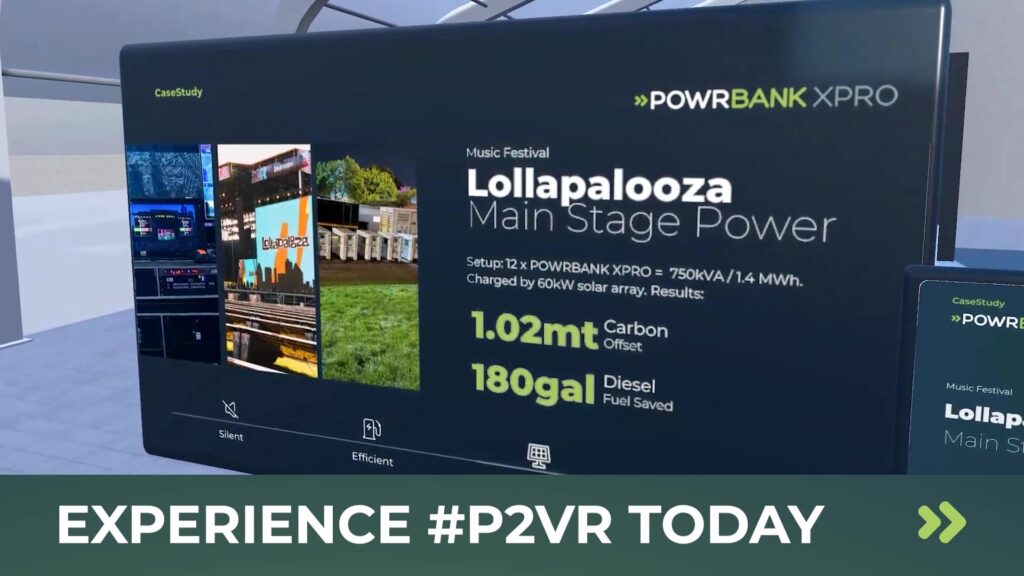
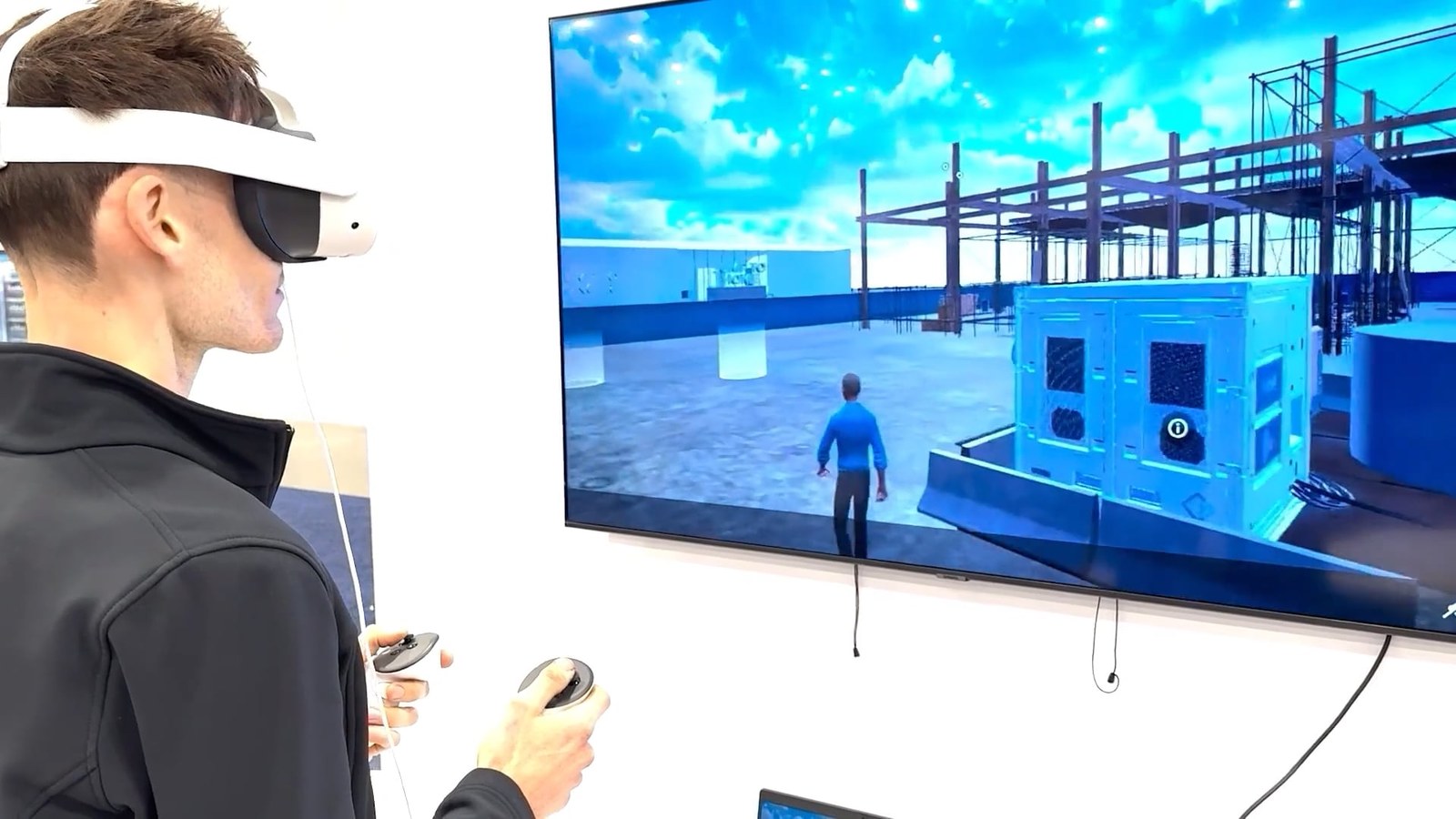
A main showroom holds four units, PRO, XPRO, MAX, and XPRO Plus, with signage and video overviews. From there, visitors jump to a construction site, where a crane and office trailers run on a MAX and XPRO units, or to a concert stage powered by a field of XPRO units and solar.
Built end-to-end, solo
Units modeled and textured in Substance and Blender, then the whole world built and made interactive in Unity. Hosted on Spatial.io, a platform I already knew from building a VR space for a podcast.
Interactive, and everywhere at once
Interactive signage, video overviews, and data panels throughout, running on a VR headset at the booth, plus desktop and mobile, so anyone could join whether or not they had goggles on.
The Result
A booth people lined up for.
- Let visitors experience the full product line, including the MAX that wasn't on the floor, and see each unit in a real setting.
- A genuine draw at the booth: people lined up to put the headset on, and spectators could watch the experience on a screen.
- Reusable across shows and channels: the same world ran on a headset, in a browser, and on mobile.